- Fully Automatic Lines
- Filling Machines
- Labeling Machines
- Sealing Machines
- Bags & Vacuum
- Shrink & Carton
Capping · FOLCA 100A & In-Line Capping Modules
Semi-Automatic and In-Line Capping Machines
Benchtop semi-automatic capping for trigger, spray, screw, flip-top, push-pull and SK28 water caps; conveyor-mounted, project-specific capping modules for high speed and special caps.
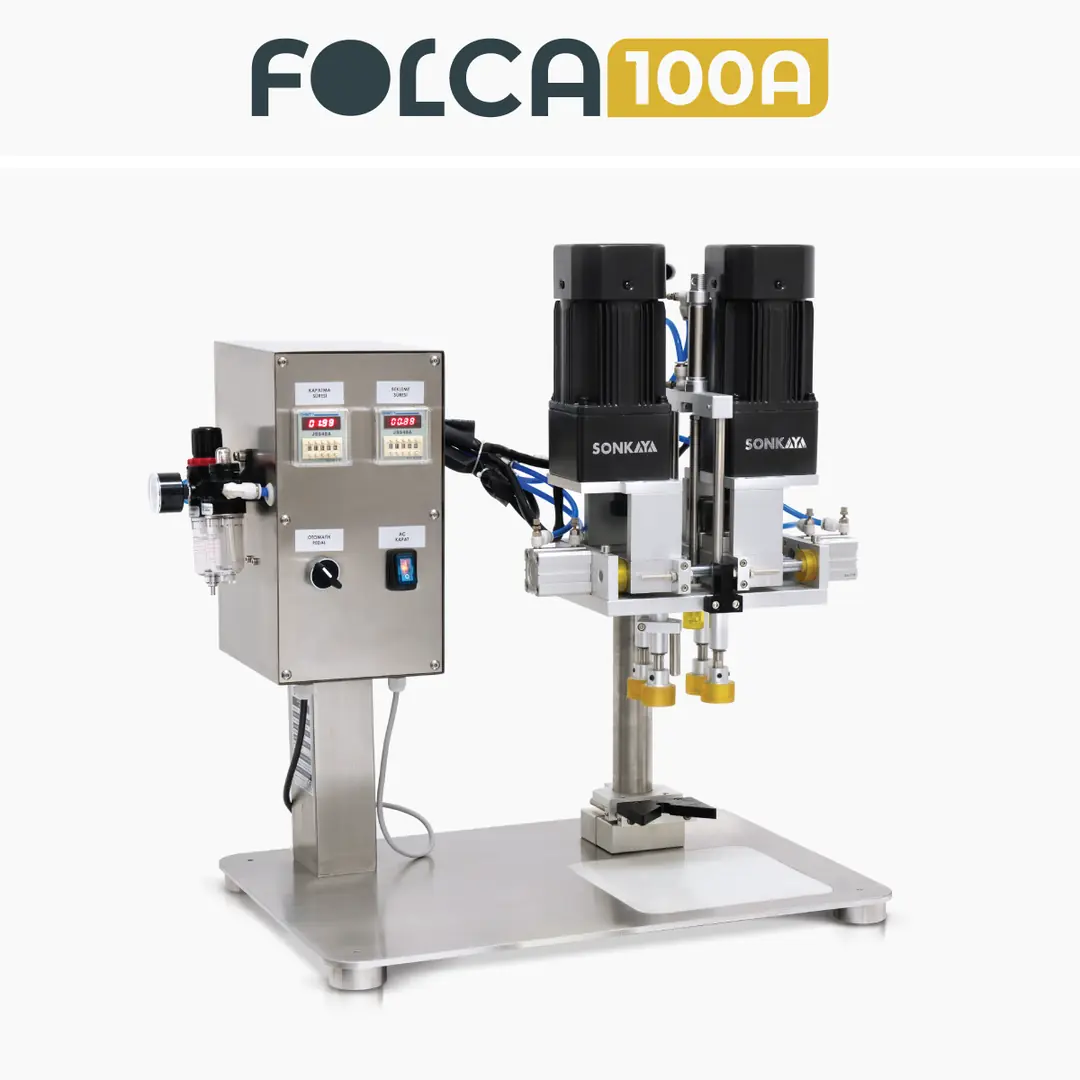
When choosing a capping machine, your cap type and daily count are decisive. Where hand tightening wears out wrists and inconsistent torque causes leaks, the FOLCA 100A steps in: in pedal or timer-controlled automatic mode it tightens 20–50 mm caps at 800–1,200 per hour. For producers with a line, we mount the same capping head on the conveyor and design cap feeding and centering to the project.
Capping Machines and Modules for Bottle, Jar and Jerrycan Caps
Which cap are you closing?
Choosing a capping machine starts with the cap type: plastic caps that close by tightening, aluminum caps that close by crimping, and water/food caps that need line-speed feeding all require different mechanisms.
Trigger & Spray Caps
Trigger caps of detergent, cleaning and garden products, and cosmetic spray caps. The hardest group to tighten by hand, and the one with the most frequent torque inconsistency.
Screw, Flip-top & Push-pull
Standard screw caps of bottles, jars and small jerrycans, flip-top and push-pull caps. Switch between them on one machine within the 20–50 mm range.
Aluminum ROPP / Crimp Caps
Closing a metal cap on a glass bottle by crimping it onto the thread (olive oil, syrup, sauce bottles). Needs a crimping mechanism, not tightening.
SK28 Water Caps & Line Caps
SK28-type caps on water, vinegar and beverage bottles: the cap is placed by hand and can be tightened with the FOLCA 100A. As speed rises, a gripper or robot-arm line module that feeds and places the cap is the more industrial solution; multi-stage caps that are pressed first and then turned need a separate module.
The foil liner inside the cap is a separate process
FOLCA 100A: feed by hand today, mount it on your line tomorrow
At its core the FOLCA 100A is a capping module designed for fully automatic lines. For producers without a line, we mount the same capping head on a table and sell it as a hand-fed semi-automatic machine with pedal or timer-controlled automatic mode.
Benchtop, hand-fed
The operator places the bottle on the table and puts the cap on by hand; the machine tightens it. In pedal mode every tightening is on your command, in automatic mode it repeats on a timer.
- 20–50 mm cap diameter, tool-free quick changeover
- 800–1,200 caps/hour — no strain on the wrist, consistent torque
- 220V mains + 6 bar compressed air
- 350 W · 50 kg · 650×430×830 mm — fits on a bench
Conveyor-mounted capping module
The same capping head moves from the table onto your conveyor. We design how the cap arrives on the line (elevator, J-channel, gripper, star wheel, robot-arm gripper at high speed) to your packaging and speed.
- When production grows the machine isn't discarded — the module moves onto the line
- Cap feeding and centering designed per project
- Filling, capping, labeling from one source — compatible with DOHA lines
See the capping module in action
Showroom test of the fully automatic line that includes the pick & place capping module.
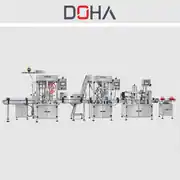
Fully automatic filling line — pick and place capping module running
▶ Running video of the fully automatic line that includes the capping module (showroom test).
In-line automatic capping modules
The capping modules we build for our filling lines are projects, not stock products: we choose and build the feeding, centering and capping method for your cap, bottle and line speed. Below are examples delivered and in production.
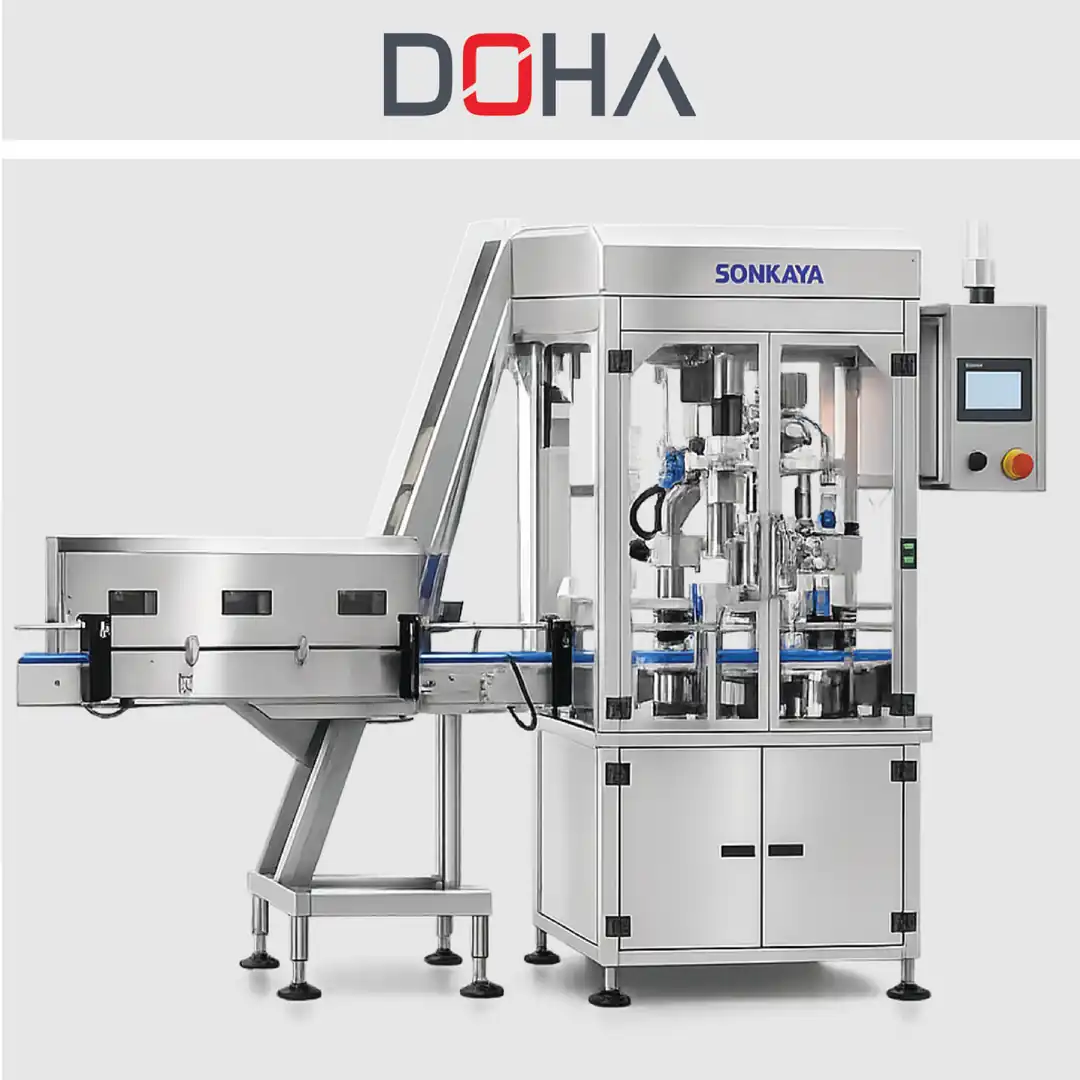
Elevator-fed pick & place capping
What did we build on this line?
- Elevator cap feeding — caps are carried up from the hopper and lined up.
- J-channel + top-pressure centering — the cap always meets the bottle neck at the same angle.
- Gripper pick & place — a servo gripper picks the cap, seats it on the bottle and tightens it.
- Runs in sync with filling and labeling on a linear conveyor.
Van · Vinegar bottle — press-on + 3-ball rotary capping
The cap is first pressed onto the bottle neck, then tightened by rotating with 3 balls. Bottles are positioned by a star wheel and enter the capping station; one module for a two-stage cap.
Sakarya · Water bottle — SK28 in-line capping
Automatic in-line feeding and capping of the SK28 cap for water bottles. Configured for the existing filling line's speed and conveyor height; as speed rises, a robot-arm gripper option caps bottles on the move without stop-and-go.
12 years of field experience in capping
Not just a machine; the right mechanism for your cap, spare parts from stock and a real contact after the sale.
Free Cap Test
Bring or ship your bottle and cap to Istanbul; let's see the tightening torque and speed on your own packaging.
A Setup That Grows from Module to Line
A capping head that starts on the bench and moves onto a conveyor; it grows with your investment.
Our Own Engineering on Line Modules
We design the feeding, centering and capping method for your cap ourselves and build it together with our DOHA lines.
A Contact After the Sale
Istanbul-based technical service, installation support by phone and video, spare parts from stock.
Infrastructure-Friendly
The FOLCA 100A runs on 220V mains and standard 6 bar compressor air; no special installation needed.
Next-Day Shipping
Machines and spare parts in stock ship the next business day; line modules are scheduled per project.
How to Choose a Capping Machine?
The right capping machine for bottle, jar and jerrycan caps comes down to three questions: the cap type, your daily count, and whether you have a conveyor line. The answers below lead you to a single solution.
1. Does your cap close by tightening or by crimping?
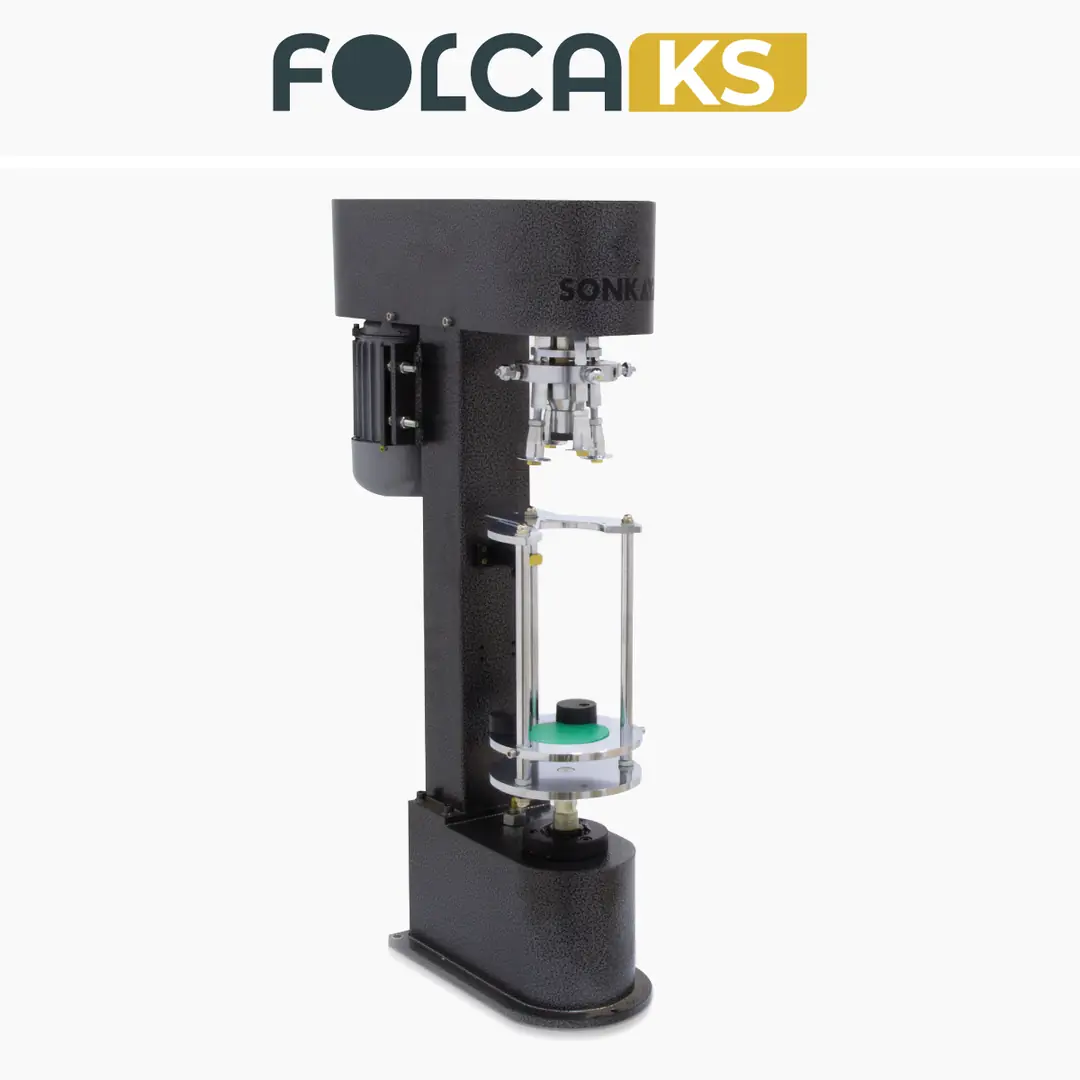
Trigger, spray, screw, flip-top and push-pull plastic caps are tightened by turning; for this group the FOLCA 100A semi-automatic capping machine in the 20–50 mm range is the right choice. Metal ROPP caps on glass bottles close by crimping onto the thread and need a separate mechanism such as the FOLCA KS aluminum cap crimping machine. A "cap tightening machine" and a "cap crimping machine" cannot be used in place of each other.
2. How many bottles do you cap per day?
For production between a few hundred and a few thousand bottles a day, semi-automatic capping — the operator places the bottle and cap, the machine tightens — is the most economical solution (800–1,200 caps/hour with the FOLCA 100A). Above a thousand an hour, placing caps by hand becomes the bottleneck; at that point an elevator-fed, gripper or star-wheel in-line capping module is needed — we engineer these together with our fully automatic filling lines.
3. Do you have a conveyor line?
Without a line you use the FOLCA 100A as a benchtop, hand-fed machine; when you build a line later, the same capping head can be moved onto your conveyor. With a line, we design cap feeding, centering and the capping method per project to your cap (SK28, press-and-turn, screw) and line speed. The capping machine price follows these three answers; share a photo of your cap and your daily count and we'll give an exact quote within minutes.
What You Need to Know About Capping Machines
What determines capping machine prices?
Three factors: the automation level (benchtop semi-automatic or in-line automatic module), the cap type (tightening, crimping, press-and-turn) and, on line modules, the feeding method (elevator, J-channel, gripper, star wheel). The semi-automatic FOLCA 100A ships from stock at a single price; in-line modules are priced per project. Send a photo of your cap and your daily count and we'll prepare an exact quote.
Which caps does the FOLCA 100A close?
It tightens trigger, spray, screw, flip-top and push-pull plastic caps in the 20–50 mm diameter range. Capacity is 800–1,200 caps/hour; in pedal mode each tightening is on the operator's command, in automatic mode it runs on a timer. SK28 water caps can be placed by hand and tightened with this machine; aluminum crimp caps are outside its scope.
Can the semi-automatic machine be mounted on a line later?
Yes. The FOLCA 100A is essentially a capping module designed for a line; for producers without a line we mount it on a table and sell it hand-fed. When you build a line, the same capping head can be moved onto the conveyor; cap feeding and centering are added per project at that stage.
What is the difference between a cap tightening machine and a cap crimping machine?
Tightening closes a threaded plastic cap by turning it with torque (FOLCA 100A). Crimping forms a flat aluminum ROPP cap on a glass bottle by pressing it onto the bottle thread with rollers/balls (FOLCA KS). Because the mechanisms differ, one cannot do the other's job.
Can you close water bottle (SK28) or vinegar bottle caps?
Yes. An SK28 water cap placed by hand can be tightened with the FOLCA 100A; as speed rises we build a gripper pick & place module that feeds and places the cap automatically, and at even higher speeds a robot-arm gripper module that caps bottles without stopping as they move on the linear conveyor. For vinegar caps that are pressed first and then turned, we design a press + 3-ball rotary capping module. Line modules are integrated into your filling line and built per project.
Do these machines also bond the aluminum foil inside the cap?
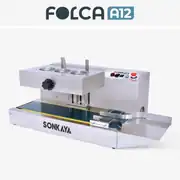
No. The safety/seal liner under the cap is bonded by induction, with a separate machine, after the cap is closed. See our induction foil sealing machines page; the two machines are often used together.
What about warranty, service and testing?
The FOLCA 100A and KS carry a 2-year warranty; we have an Istanbul-based technical service team and spare parts from stock. Before buying, you can bring your bottle and cap to our test center in Istanbul and try the machine free of charge with your own product. On in-line modules our team performs the installation on site.
Let's pick the right mechanism for your cap together.
Get a Price on WhatsAppBefore and after capping
On most lines the flow is filling → capping → foil liner (induction) → labeling. Let's solve the other steps from a single source too.
Before: Filling
Need liquid, viscous or powder/granule filling? Filling machines from semi-automatic benchtop to line type.
Filling Machines →After: Foil Liner Inside the Cap
Bond the aluminum safety liner under the cap by induction for leak-tightness and shelf life.
Induction Foil Sealing →Last: Labeling
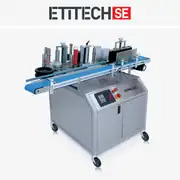
Semi- and fully automatic ETITECH labeling machines for round, flat-surface and two-sided packaging.
Labeling Machines →Let's find the right capping solution for your cap
Send a photo of your cap and bottle; benchtop or in-line module — we'll settle it the same day.