- Fully Automatic Lines
- Filling Machines
- Labeling Machines
- Sealing Machines
- Bags & Vacuum
- Shrink & Carton
FOLCA Series · Aluminum Foil Liners · Manual & Semi-Automatic
Induction Foil Sealing Machines
Bond the aluminum safety liner in bottle, jar and jerrycan caps in 1 second; leak-tightness, freshness and shelf life in a single step.
An induction foil sealer (also searched for as an aluminum foil sealing machine or cap liner sealer) heats the aluminum laminated liner inside the cap with a high-frequency electromagnetic field and bonds it to the container mouth. From a 10 mm dropper to a 130 mm jerrycan mouth: handheld manual FOLCA M4 / M8 / M13 and the conveyor-fed semi-automatic FOLCA A12; compatible with glass and plastic (PE, PET, PP, PS, PVC) containers, no liquid cooling needed.
Cap Liner Induction Sealing Machines · Bottles, Jars and Jerrycans
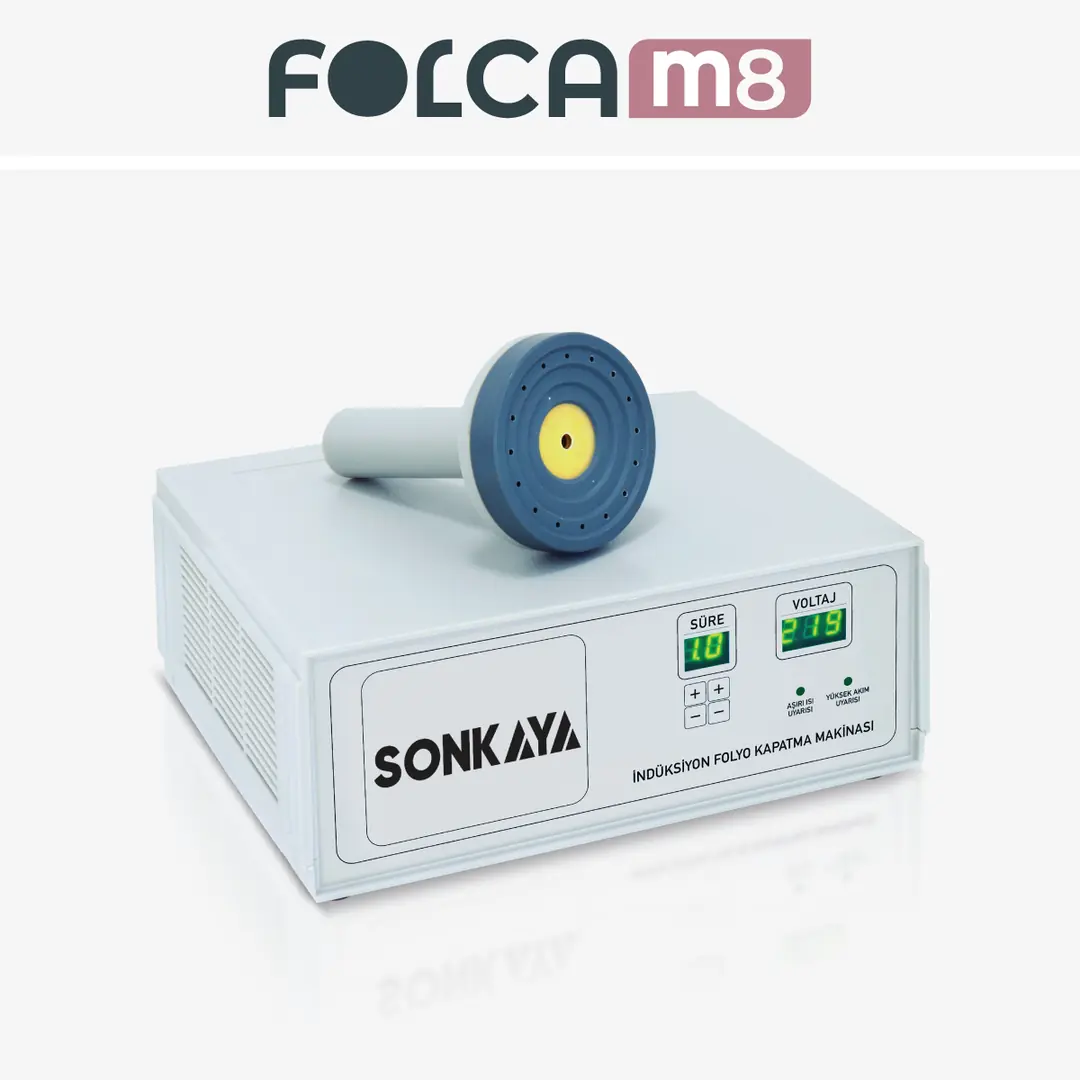
FOLCA M8 20-80MM Manual Induction Cap Sealer 20-80mm
20 – 80 mm · Standard PET/glass bottles, jars, small drums · Handheld head · 20–50 pcs/minView →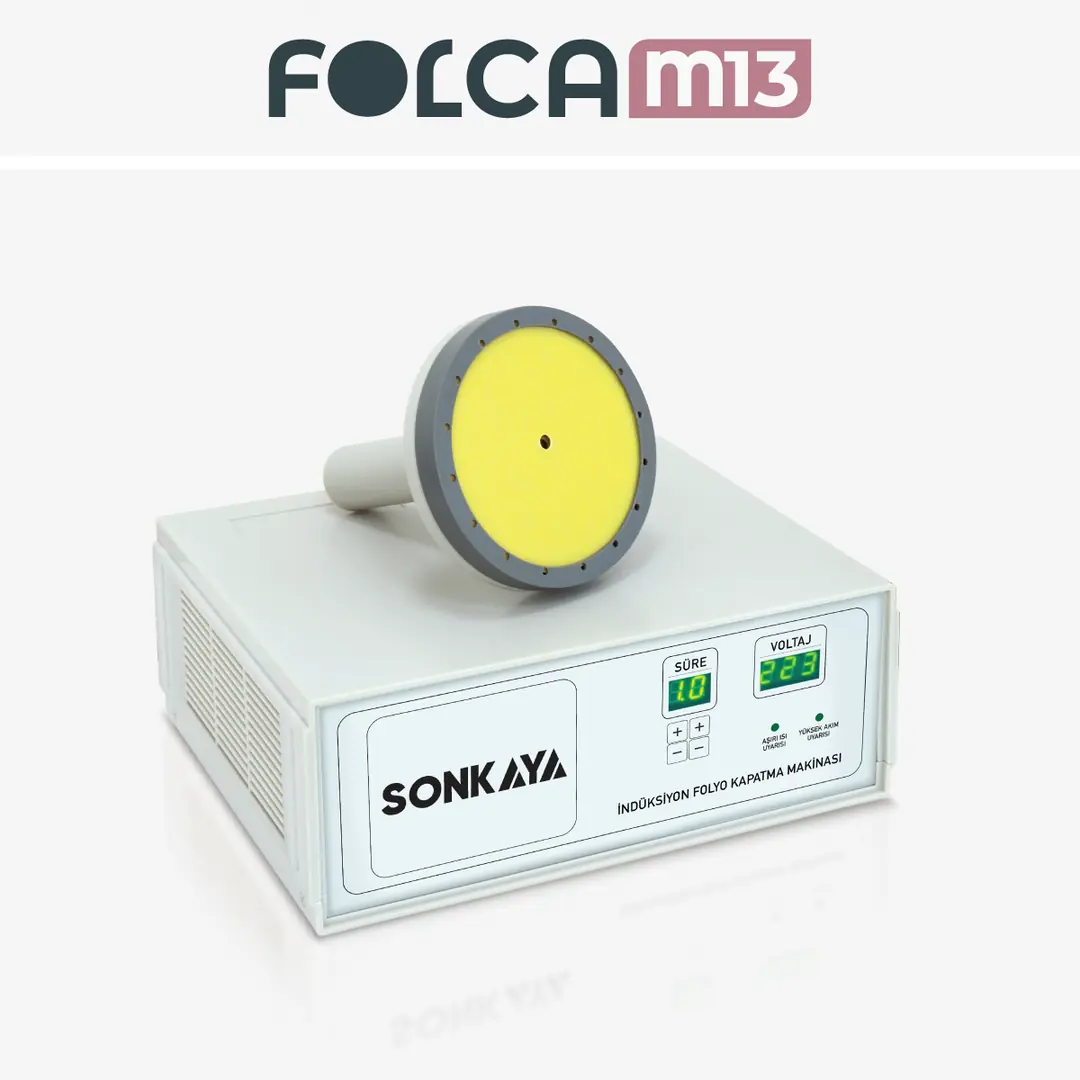
FOLCA M13 50-130MM Manual Induction Cap Sealer 50-130mm
50 – 130 mm · Wide-mouth jar, drum, bucket lids · Handheld head · 20–50 pcs/minView →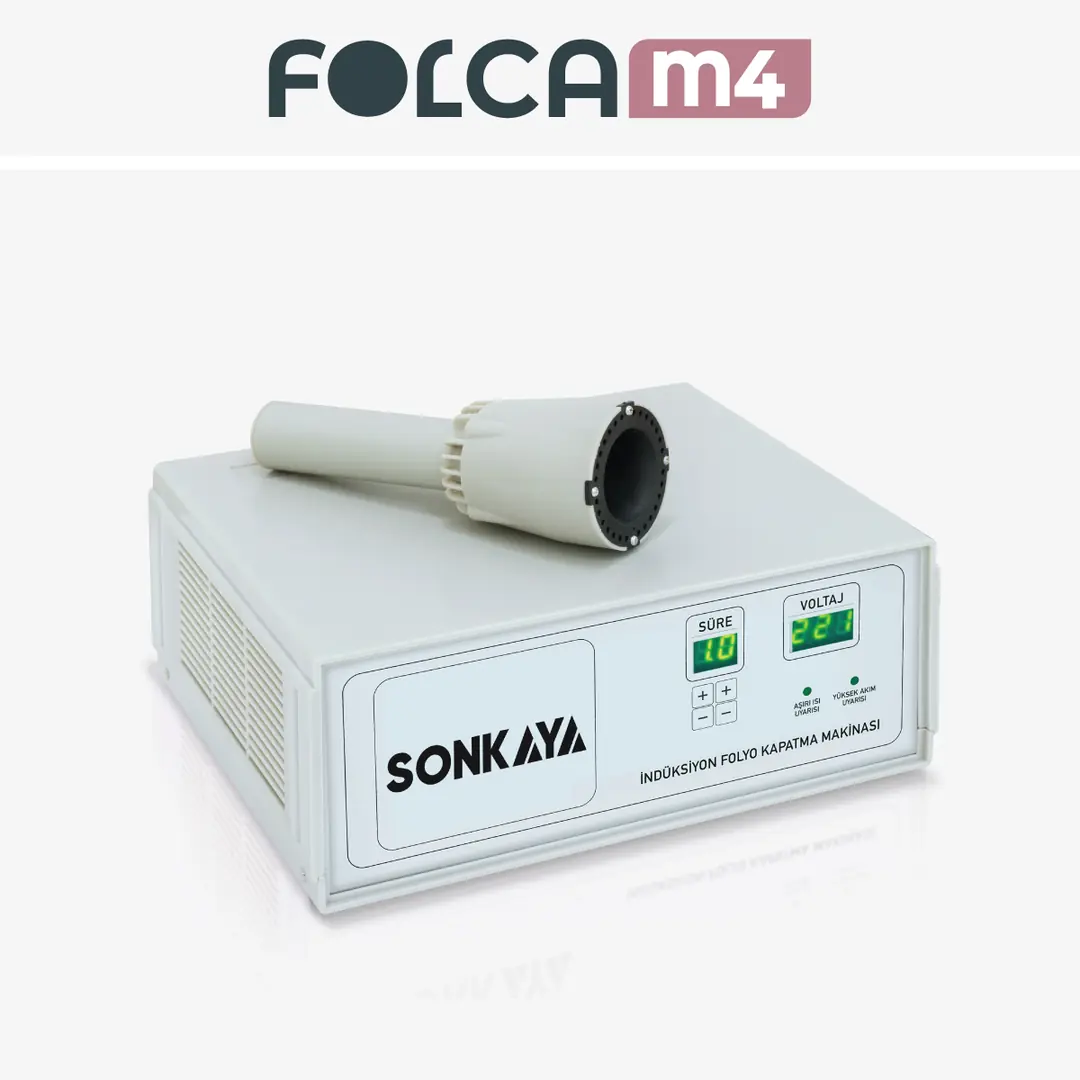
FOLCA M4 10-45MM Manual Induction Cap Sealer 10-45mm
10 – 45 mm · Dropper, SK38 spout, small-neck bottles · Handheld head · 20–50 pcs/minView →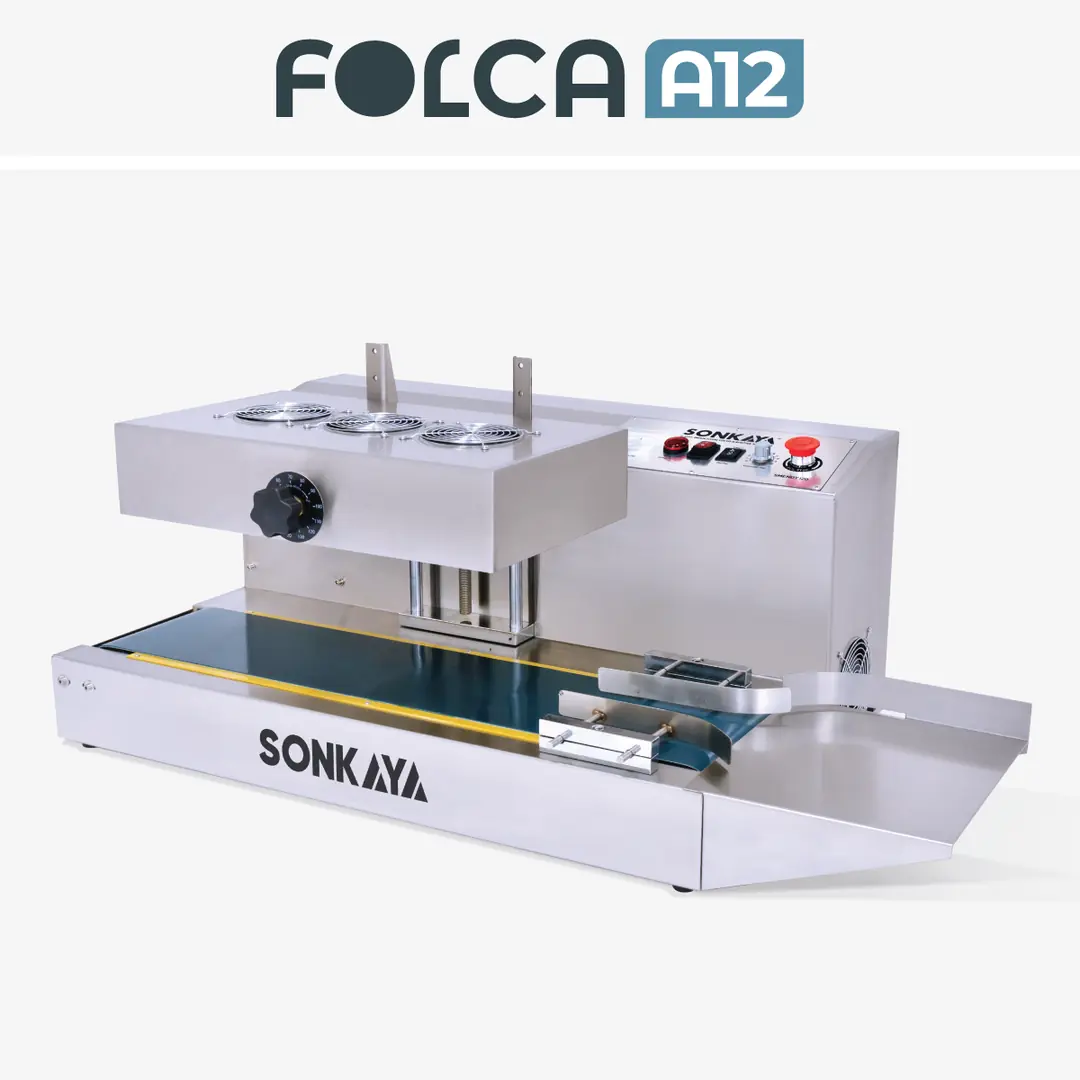
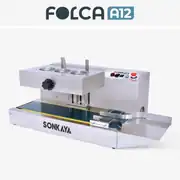
FOLCA A12 30-130MM Semi-Auto Induction Cap Sealer 30-130mm
30 – 130 mm · Conveyor, 40–80 pcs/min · No liquid cooling · Head extends to connect to lineView →Which cap are you bonding aluminum foil to?
Induction's only requirements: the cap is insulating (plastic/glass), the liner is inside the cap and the container is not metal. The rest is diameter and the right liner type.
Dropper & SK38 Push-Pull Caps
Essence, serum, e-liquid, aromatherapy and pharma bottles; dropper caps and SK38 push-pull water/food caps. At small diameters the current area is smaller, so the time is kept slightly longer.
PET / Glass Bottles & Jars
Water, beverage, sauce, olive oil, liquid soap and shampoo bottles, plus honey, jam and sauce jars. The most common group; standard 28–63 mm caps fall in this range.
Wide-Mouth Jars, Jerrycans & Buckets
Caps over 80 mm such as powdered food, protein powder, paint/chemical jerrycans, food buckets and grain jars; for powders the liner is critical as a moisture barrier.
On a Filling Line
On lines flowing filling → capping → induction → labeling, the A12's induction head cable is extended and the head mounted over the conveyor; no separate station needed.
No induction on metal caps or metal containers
Choose the right liner: it depends on the container material
Find the time in 0.2 s steps
Handheld manual or conveyor semi-automatic?
Same induction principle; the difference is whether you or the conveyor brings the head over the bottle. Your daily count and whether you have a line decide.
Handheld manual — M4 / M8 / M13
The operator puts the filled, capped bottle on the table, brings the induction head over the cap and presses the button; countdown on the display, beep at the end. No need to press the head down — the current only acts on the aluminum foil.
- 3 kg, 28×34 cm — a corner of the bench is enough, portable
- 500 W, standard socket; time adjustable 0.5–1.5 s
- Bottle height doesn't matter — any size container
- The most economical entry for samples, boutique and mid volume
Conveyor semi-automatic — A12
Bottles move on the belt and the liner bonds as they pass under the fixed induction head. The operator only places bottles on the belt; 40–80 per minute.
- 30–130 mm caps, 40–400 mm bottle height on one machine
- Conveyor speed adjustable up to 10 m/min
- No liquid cooling — no water connection, no chiller
- The induction head's cable extends to adapt it to a filling line
- 304 stainless + aluminum body, 43 kg
The right foil sealer for your cap diameter
In induction foil sealing the first thing that decides the choice is the cap diameter; the second is the daily count. The four FOLCA models overlap to cover the whole range from 10 mm to 130 mm.
* Capacity varies with liner diameter, liner type and operator speed · All models: 2-year warranty · 220V mains · no liquid cooling · free testing in Istanbul.
See the Machines at Work
Short clips shot in our Istanbul showroom with real bottles and lined caps: the head approaches the cap, beep, the cap is opened and the bond checked.
Standard caps on PET bottles and jars
The most common diameter range; cap opened to check the seal.
FOLCA M8 →Foil sealing on a moving conveyor
Semi-automatic, 40–80 bottles per minute; no liquid cooling.
FOLCA A12 →12 years of field experience in foil sealing
Thousands of FOLCA units in the field; the right diameter, the right liner and a real contact after the sale.
Free Bonding Test
Bring or ship your bottle and lined cap to Istanbul; let's verify the bond and leak-tightness on your own packaging.
Seamless 10–130 mm Range
Four overlapping models cover every diameter from dropper to bucket; if two diameters really need two machines, we'll say so clearly.
No Liquid Cooling
The manual models and the A12 are all air-cooled; no water connection, chiller or extra maintenance item.
Liner Advice
Which liner for PE, PET, PP, glass — vented or clean-peel? Send us your cap and we'll choose for you; don't let the wrong liner get blamed on the machine.
Runs on a Standard Socket
Manual models 500 W, A12 2,000 W; all on 220V mains. No industrial power, compressor or water needed.
From Stock, Next-Day Shipping
All four models in stock; 2-year warranty, Istanbul-based technical service and induction heads / spare parts from stock.
How to Choose an Induction Foil Sealing Machine?
An induction foil sealing machine — which bonds the aluminum safety liner inside the cap and is also called an aluminum foil sealer or cap liner sealer — is chosen with three questions: the cap diameter, the daily count and the packaging material.
1. What is your cap diameter in millimeters?
The diameter directly sets the model: FOLCA M4 for 10–45 mm dropper and SK38 push-pull caps, FOLCA M8 for 20–80 mm standard bottle and jar caps, FOLCA M13 for 50–130 mm wide-mouth jar, jerrycan and bucket caps. Because the ranges overlap, producers using two diameters usually manage with one machine; the time is increased slightly at small diameters and reduced at large ones.
2. How many bottles do you seal per day?
For a few hundred to a few thousand a day, a handheld manual foil sealer (20–50 per minute) is the most economical solution; 3 kg, works on a bench, bottle height doesn't matter. In serial production, and especially if you have a line, the conveyor-fed semi-automatic FOLCA A12 (40–80 per minute, 30–130 mm) steps in; its induction head cable can be extended to mount it on your filling line.
3. Is your packaging plastic, glass or metal?
Plastic (PE, PET, PP, PS, PVC, ABS) and glass containers are suitable for induction; the cap must be plastic — a metal cap reflects the field and can damage the machine, and tins are not suitable. On glass jars a plastic cap is used; on the A12, glass jar applications are for non-liquid products. Choose the liner type by container material (different laminated liners for PE, PET/PVC, PP, glass; clean-peel, pierce-to-open and vented options). Not sure? Send a photo of your cap; see the bond with your own product at our test center in Istanbul.
What You Need to Know About Induction Foil Sealing
Are a foil sealing machine and a foil bonding machine the same thing?
Yes. Both describe the machine that bonds the aluminum safety liner inside the cap to the container mouth by induction; "aluminum foil sealing machine", "cap liner sealer" and "induction sealer" all refer to the same product. It is also searched for under the DGYF model code. At Sonkaya this group is the FOLCA series: M4, M8, M13 (manual) and A12 (semi-automatic).
Which model for which diameter?
FOLCA M4 10–45 mm (droppers, SK38 push-pull), M8 20–80 mm (standard bottles and jars), M13 50–130 mm (wide-mouth jars, jerrycans, buckets), A12 30–130 mm conveyor semi-automatic. The ranges overlap; if you have two diameters, one machine is usually enough. Send a photo of your cap and we'll measure the diameter and tell you.
Does it work on glass bottles and jars?
Yes, glass containers are suitable for induction; the condition is that the cap is plastic. Manual models seal glass bottles and jars directly. On the FOLCA A12, glass jar applications are done with a plastic cap and non-liquid products. Unlike many devices on the market, the A12 seals glass jars without needing liquid cooling.
Can I bond foil to a metal cap or a tin?
No. The cap must be insulating (a plastic derivative); metal or metal-containing caps reflect the induction field and can damage the machine. Metal containers (tins) are not suitable either. For metal ROPP caps, a crimping machine is a separate product (capping category).
Do I buy the liner separately, or does it come inside the cap?
Most cap manufacturers place the aluminum laminated liner inside the cap ready-made; you don't need to add a liner. If you source liners separately, choose by container material: there are different liners for PE, PET/PVC, PP and glass; clean-peel, pierce-to-open and pressure-balancing vented types are available.
How is the sealing time set, and what causes darkening?
The time is set between 0.5 and 1.5 seconds depending on liner diameter and container material: increase it as the diameter gets smaller, reduce it as it gets larger. Open the cap and check — the cardboard/foam should stay in the cap, the aluminum layer on the container mouth. Darkening of the aluminum means too much time; if bonding is incomplete, add 0.2 seconds. Turn the container upside down and press to verify leak-tightness.
Is industrial power or water cooling needed?
No. Manual models are 500 W, the A12 is 2,000 W, and all run on a standard 220V socket. The FOLCA series is air-cooled; no water connection or chiller is needed. No compressor either.
Can I integrate it into my filling line?
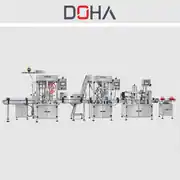
Yes. The FOLCA A12's induction head cable can be extended to mount the head over your conveyor; after filling and capping, the liner bonds as bottles pass under the head (30–130 mm caps, 40–400 mm bottle height). On our fully automatic DOHA lines we build this step into the line.
What about warranty, service and testing?
All FOLCA models carry a 2-year warranty; we have an Istanbul-based technical service team and induction heads / spare parts from stock. Before buying, you can bring your bottle and lined cap to our test center in Istanbul and try the bond and leak-tightness free of charge with your own product.
Let's choose the right diameter and liner for your cap together.
Get a Price on WhatsAppBefore and after foil sealing
The order is usually filling → cap tightening → induction foil → labeling. The liner bonds only on a tightly closed cap; if you have no machine to tighten the cap, let's solve that from one source too.
Before: Filling
Liquid, viscous or powder/granule filling; from semi-automatic benchtop to line type.
Filling Machines →Just Before: Capping
The liner bonds only on a firmly closed cap. The FOLCA 100A and in-line capping modules for trigger, spray, screw and SK28 caps.
Capping Machines →After: Labeling
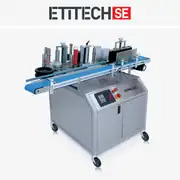
Semi- and fully automatic ETITECH labeling machines for round, flat-surface and two-sided packaging.
Labeling Machines →Let's choose the right induction sealer for your cap
Tell us your cap diameter and daily volume; we'll give you an exact quote, foil compatibility included, the same day.