How to Choose a Labeling Machine
In this guide we have gathered, in plain language, the criteria to check before buying a labeling machine that fits your business.
Written by Mehmet Dilli
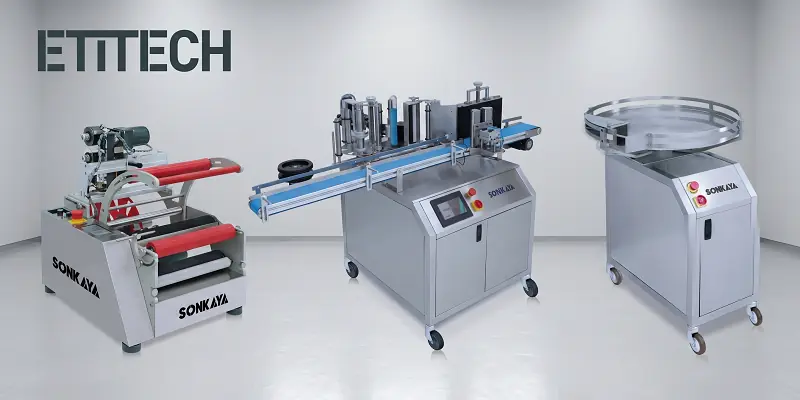
The right labeling machine labels your products faster and more neatly; the wrong one wastes time and labels every single day. In this guide we have gathered, in plain language, the criteria to check before buying a machine that fits your business.
First, know the types: manual, semi-automatic, automatic
Labeling machines fall into three groups by automation level. Which one suits you depends largely on your daily production volume.
| Type | Suitable volume | Key strength |
|---|---|---|
| Manual | Low / variable | The most economical start; takes little space |
| Semi-automatic | Medium | High consistency with operator feeding |
| Automatic | High / mass production | Continuous labeling at line speed |
For a small workshop an automatic line is an oversized investment; for a mass-production plant a manual machine becomes a bottleneck. The right starting point is not the type but pinning down the capacity.
5 questions to ask before buying
1. What shape is the product? Bottle, flat surface, curved?
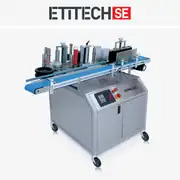
The surface the label sticks to is the machine's most decisive criterion. Round bottles need a wrap-around system, while boxes and flat surfaces use a different applicator. Pin down your product geometry from the start; most wrong purchases come from here. For bottle-focused work, for example, bottle labeling machines are a category of their own.
2. How many units do you label per day / per shift?
Set your target capacity in units per hour and add room for growth. A machine that is enough today may slow your line down six months from now. Planning capacity slightly higher than needed is cheaper than buying a second machine soon after.
3. What is the label type and size?
The roll label's width, winding direction and material (coated paper, clear, thermal) must match the machine. Clear labels cause reading problems on some sensors; this needs to be discussed up front.
4. Will it integrate with your existing line?
Will the machine work on its own, or be added downstream of your filling or date coding line? Measure conveyor compatibility and floor space from the start.
5. Who provides after-sales support?
The machine may be cheap; but if spare parts don't arrive or you can't reach service for days, the cost multiplies. Warranty, spare-parts supply and who provides technical service matter as much as the machine itself.
In shortPin down your capacity first, then choose the type that fits your product shape. The most often skipped criterion is after-sales support — trying to save money there is the mistake that costs the most.
Three common mistakes
- Looking only at the price. If the cheapest machine turns out slow or hard to maintain, the total cost goes up.
- Buying without a trial. Don't decide before testing the machine with your own label and product.
- Ignoring growth. A machine bought for today's volume becomes tomorrow's bottleneck.
Before you decide: try it
A labeling machine is an investment you will use for years. The soundest method is to see the machine running with your own product and label. An application looking good in a brochure and sticking properly on your bottle are not always the same thing.
Let's find the right machine for you together
Tell us your product and target capacity; we'll recommend the right labeling solution from the manufacturer, with warranty. Try it in our showroom if you like, then decide.
Reach us on WhatsApp